Most basements do not need finishing. They need to stop being unpleasant. Those are different jobs, and the second one is far cheaper and far more likely to last.
A Cleveland basement is a masonry box in wet ground. That is not a defect, it is what it is. The mistake is treating it like an upstairs room.
Solve the water first, always
Before anything else happens, water has to be going away from the house rather than toward it. Gutters clear, downspouts carrying water away from the wall rather than dumping it at the corner, and ground sloping away from the foundation.
This is dull and it is unglamorous and it is the entire ballgame. Every basement problem we are called about that is not solved by this list is rarer than people think.
Why framing everything is usually the wrong move
The instinct is to frame walls, insulate, board over and carpet it, so the basement looks like the rest of the house.
The trouble is that masonry below ground carries moisture, slowly and permanently. Build a sealed wall tight against it and you have made a cavity that gets damp and never dries out, with everything organic inside it. You will not see the problem for a couple of years, and by then it is behind a wall.
Anything you build against a damp wall is a place for moisture to go and hide.
What actually works down there
For the great majority of the basements we work on, the answer is a short list.
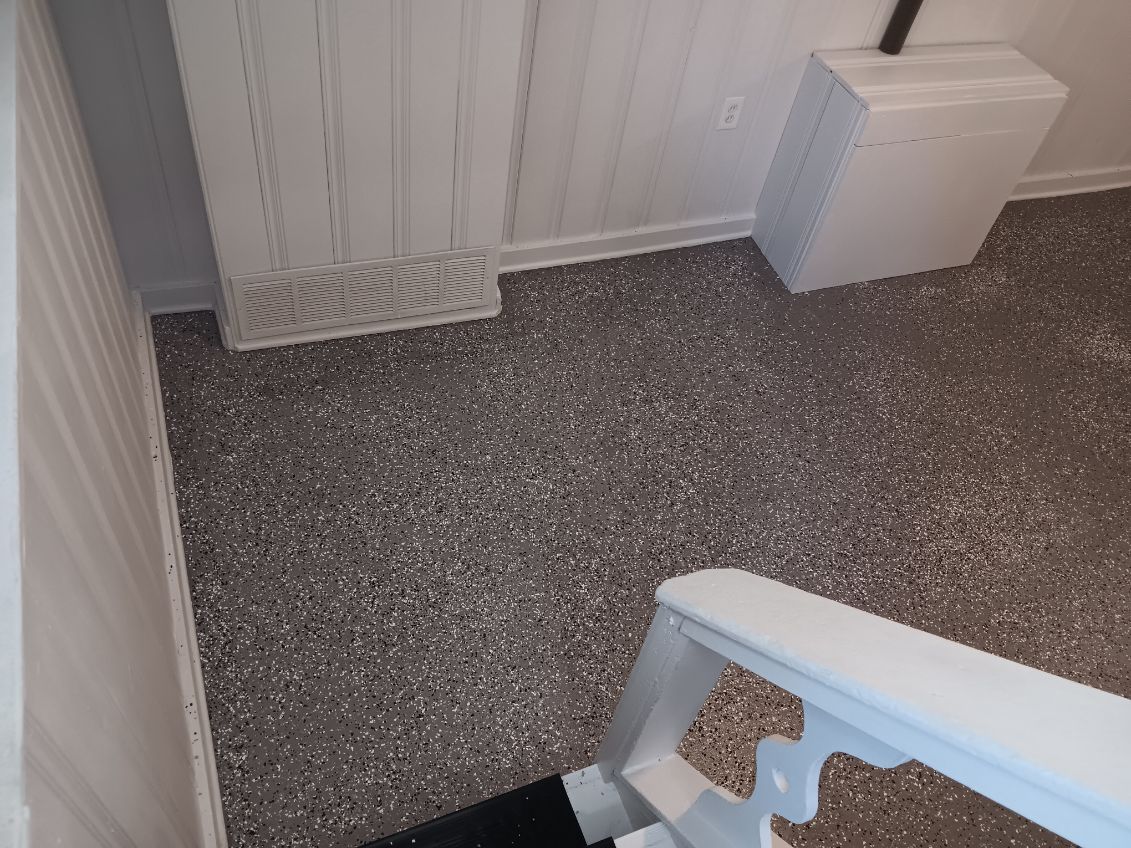
- A coated floor. The old floor gets prepared and coated. It cleans easily, it does not hold damp the way a covering does, and it changes how the whole space feels more than anything else on this list.
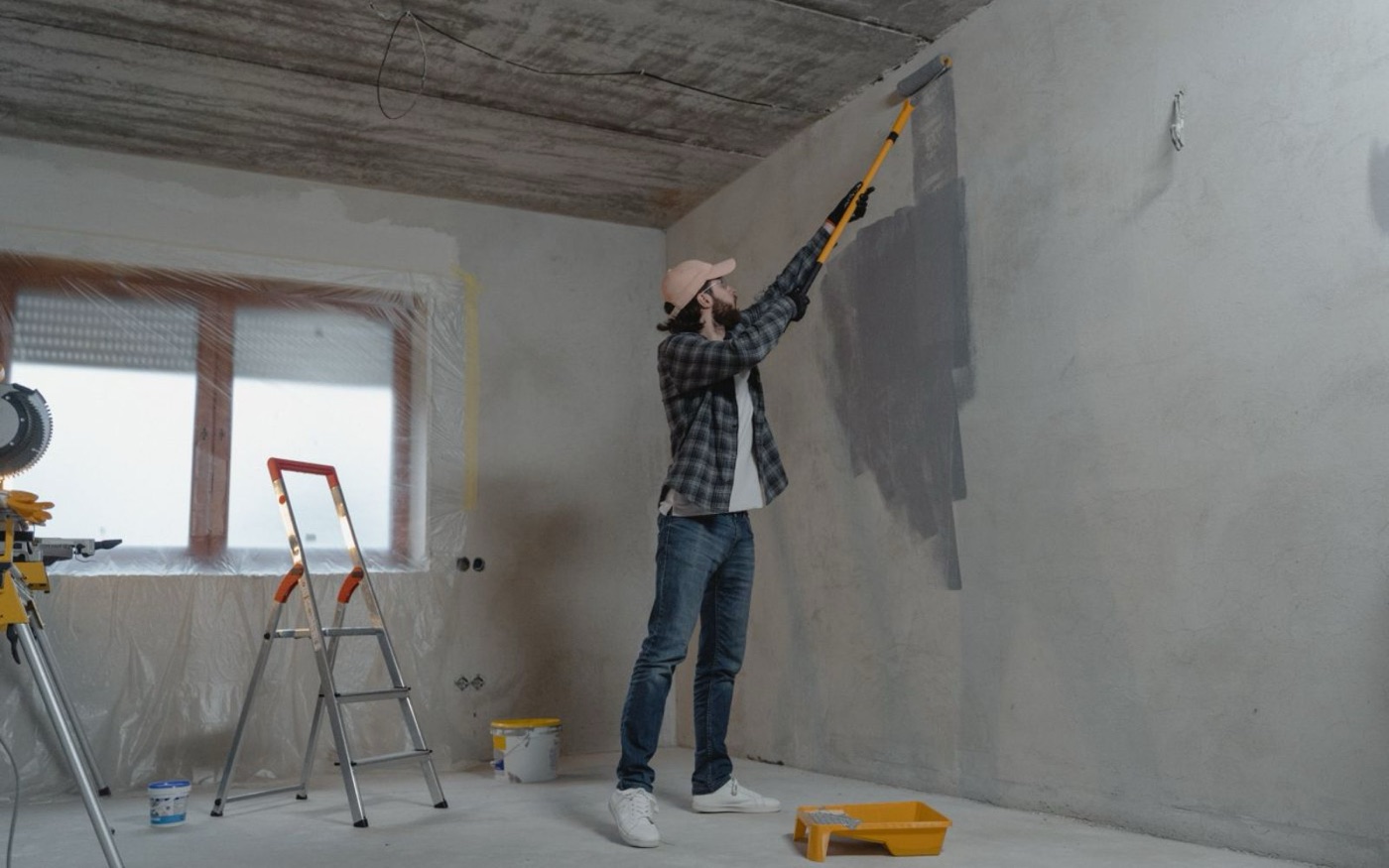
- Painted walls and ceiling. Bright paint on masonry and on the joists overhead turns a dark box into a usable room, and it leaves the wall able to dry.
- Proper light. Most basements are lit by whatever was there in 1950. This is the cheapest change with the biggest effect.
- Tidy what is on the walls. Boxing in the things that need boxing in, and leaving access to the things you will need to reach.

When framing is the right answer
There are real cases for it. Closing in a bathroom, boxing a mechanical area, or building a single room where the wall conditions have been checked and dealt with properly.
The distinction is whether someone has looked at the wall first, or is simply covering it.
The honest summary
If your basement is dry and you want more room in the house, there is a conversation to have about a proper build. If your basement is grim and you want it to stop being grim, coat the floor, paint it, light it, and spend the difference upstairs.
Thinking about a project?
Tell us what you are looking at and we will come and see it. The walkthrough and the written estimate are free.